
Direct Wave or Line of Sight Propagation

Radio propagation basics

Direct-Wave Propagation

How antenna height, line of sight and atmospheric refraction determine the range of VHF, UHF and microwave signals.

Line of sightRadio horizonVHF and UHF
Diagram comparing the optical horizon with the refracted radio horizon
1

What is direct-wave propagation?

Direct waves travel from the transmitting antenna towards the receiving antenna through the lower atmosphere. Antennas installed on tall structures can “look” beyond nearby obstructions and communicate with receiving antennas farther away.

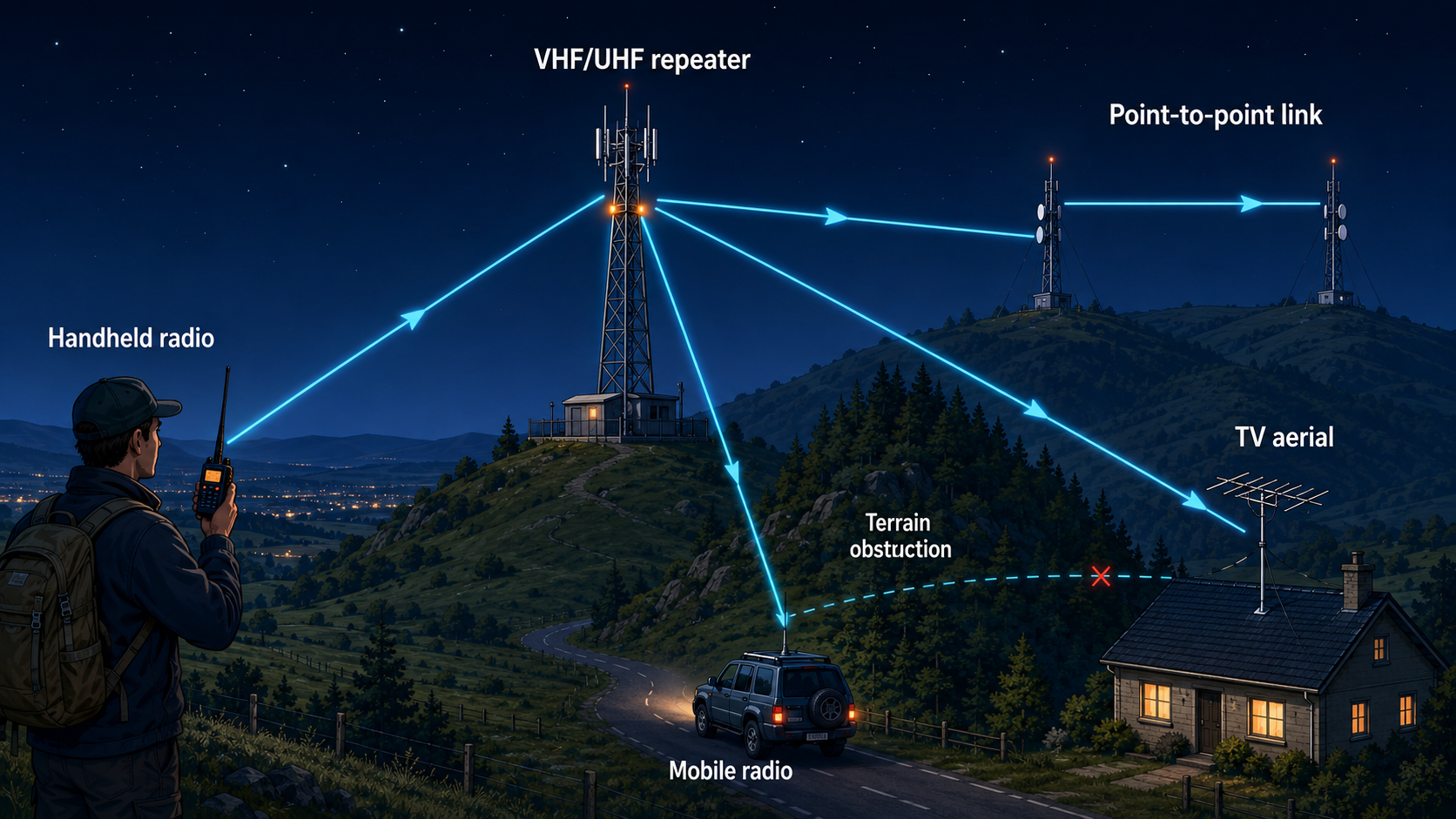
This is the usual propagation mode for VHF and UHF repeaters, local mobile radio, television broadcasting and point-to-point links.
2

The optical horizon and radio horizon

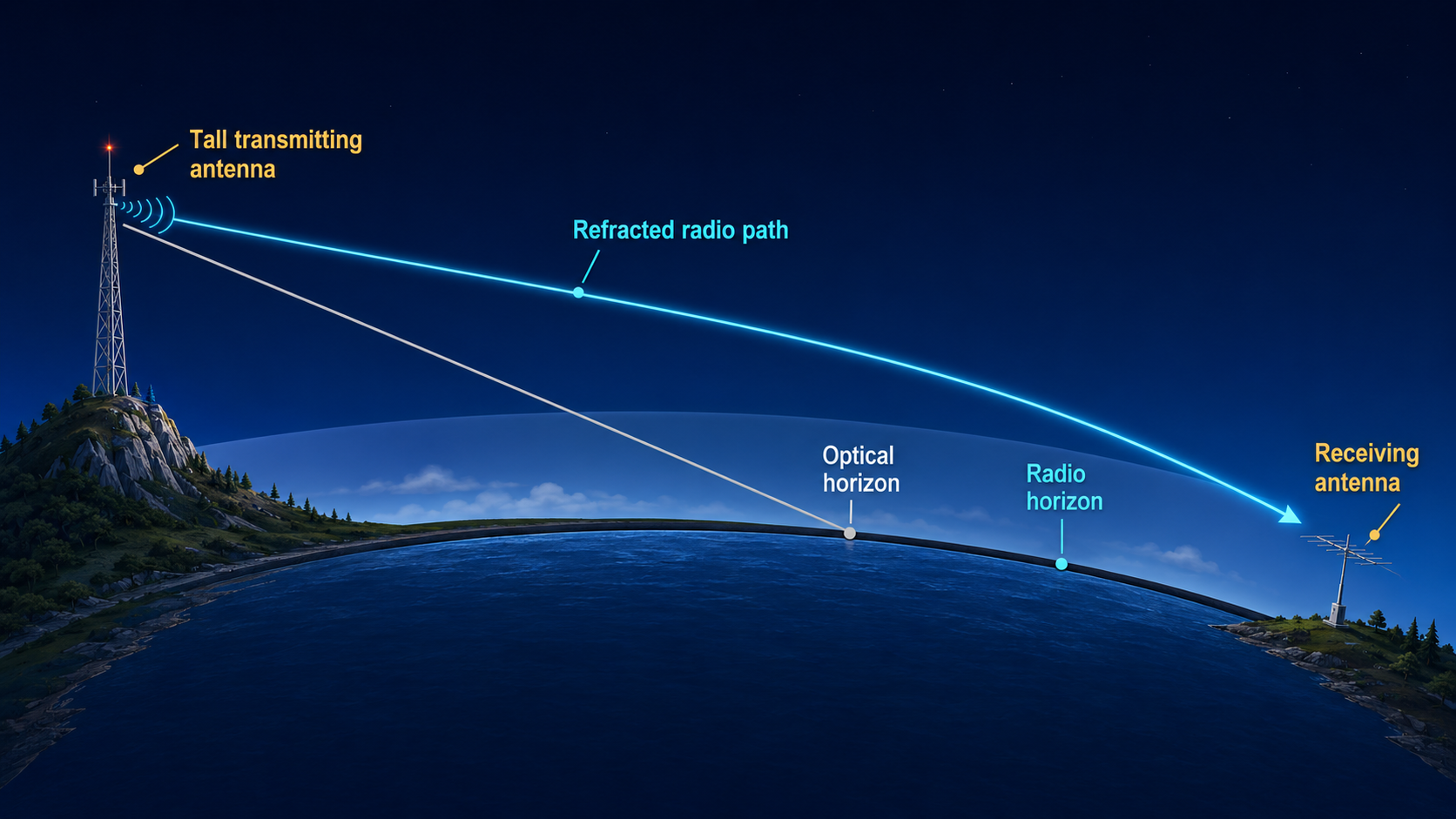
The lower atmosphere normally refracts radio waves slightly towards the Earth. Under standard conditions, this makes the radio horizon approximately 15% farther than the optical horizon.

Atmospheric conditions can increase or reduce this distance. Strong temperature inversions may occasionally produce much longer VHF and UHF paths through tropospheric enhancement or ducting.

Radio horizon extending beyond the optical horizon due to atmospheric refraction
Normal atmospheric refraction gently bends the radio path, making the standard radio horizon about 15% farther than the optical horizon.
3

Where direct waves are used

  • VHF and UHF amateur radio repeaters
  • Local handheld and mobile radio contacts
  • FM and television broadcasting
  • Microwave and point-to-point radio links
  • Marine, aviation and emergency communications
4

Height and obstructions matter

Increasing antenna height usually improves range because it extends the radio horizon and helps clear buildings, hills and trees.

Dense foliage is not invisible to radio waves. Trees, buildings and terrain can absorb, reflect or block signals, particularly at VHF, UHF and microwave frequencies. A clear path and adequate Fresnel-zone clearance provide the most reliable link.

Direct-wave services including repeater, handheld, mobile, television and point-to-point links
Direct-wave systems depend on antenna height and a clear path. Hills, buildings and dense vegetation can weaken or block a low signal path.
Bottom line: Direct-wave communication works best when both antennas are elevated and have a clear path. Normal atmospheric refraction extends the practical radio horizon slightly beyond the visual horizon.